How to Choose a Cultural Tour Operator in Spain
20 August 2026 · Juan Sanchez, Director, Odisea Tours

20 August 2026 · Juan Sanchez, Director, Odisea Tours
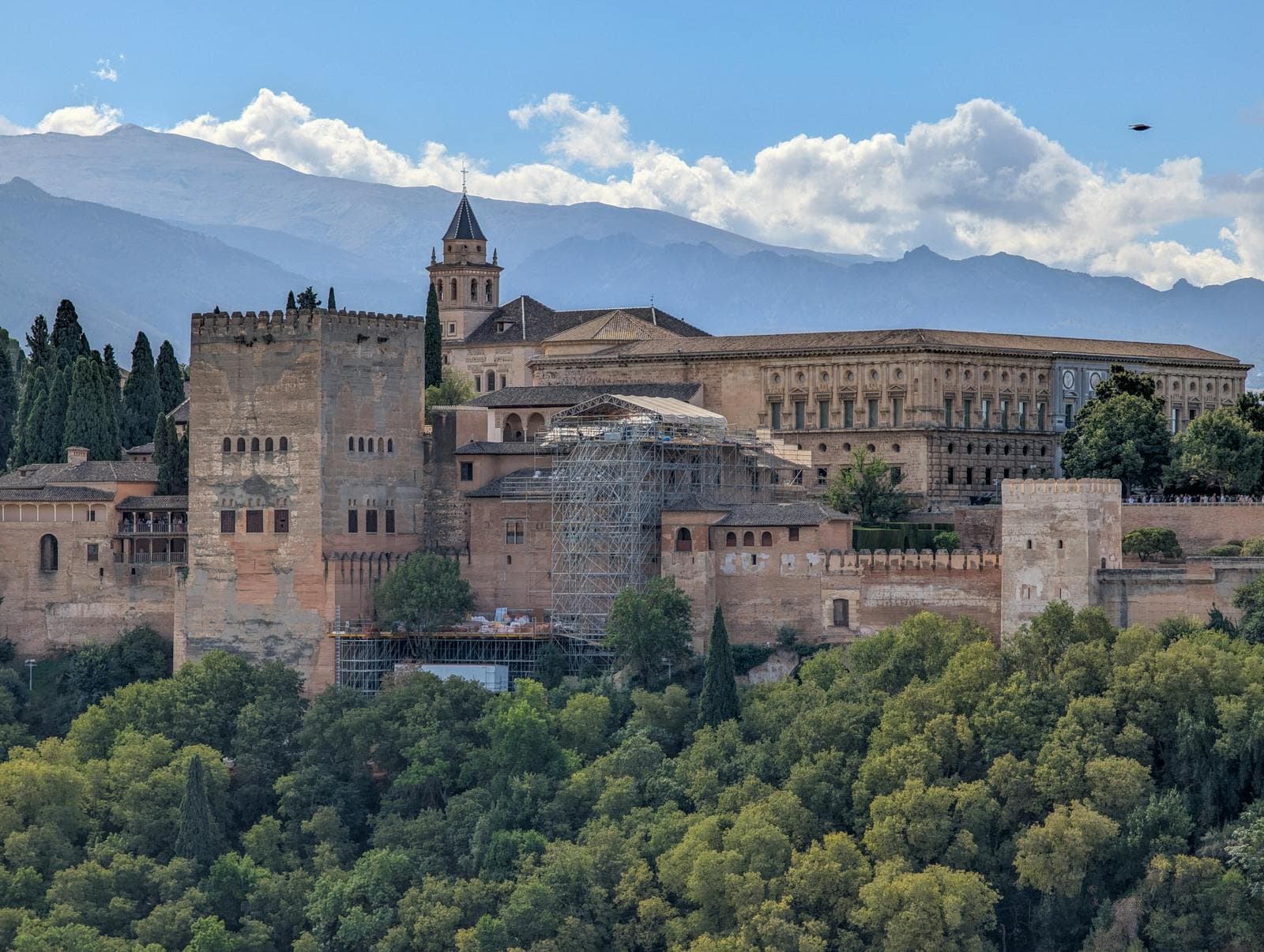
There are a lot of companies selling cultural tours of Spain, and from the outside their websites are close to indistinguishable. Same monuments, same photograph of the Alhambra at golden hour, same promise of authentic experiences. The differences that matter are structural, and almost none of them are visible on a homepage.
Here is what actually separates them, from the perspective of the people who operate the days on the ground.
The first question is whether you are buying seats or buying a trip. A scheduled departure sells individual places on a fixed itinerary with fixed dates, filled with whoever else books it. A private tour is built for one group and nobody else is on it.
For a defined group, a circle of friends, a family, an alumni association, a museum group or a parish, private wins on almost every axis. The dates are the ones that suit your people. The pace is yours to set, which matters more than anyone expects when half the group wants three hours in the Prado and the other half wants ninety minutes and lunch. And access is easier to arrange, because a studio, a private pena or a museum visit outside public hours can be organized for a known group of twenty and cannot be organized for a rolling mix of strangers holding tickets.
For one or two travelers it is the opposite. A private trip spreads the coach, the guide and the group bookings across the travelers, so a couple should book a scheduled departure and keep the difference.
Two itineraries can list the same monuments and produce entirely different weeks depending on the number of people walking them.
Ten to thirty travelers is the working range for a cultural trip. Inside it a guide can be heard in a chapel without a radio headset, a restaurant can seat the group at one long table, and a private visit is a realistic ask. Somewhere above thirty the day quietly reorganizes itself around logistics: two coaches, split entry times, a queue for the bathroom that eats twenty minutes, and a guide talking into a microphone to people standing thirty feet away.
This is worth asking about directly, because a brochure that says small group can mean twelve or can mean forty-four.
Every operator claims exclusive access, and a good deal of what is described that way is a normal ticket bought in advance. It is worth knowing which is which.
Real access looks specific. Dawn entry to the Alhambra and the Generalife before the gates open to the public. A curator at the Prado who can walk a group past Velazquez, Goya and El Greco without the script. A flamenco pena in Triana with the families who actually live in the neighbourhood, rather than a show with a coach parked outside. A fourth-generation ceramicist opening a studio in Ubeda. A family-run olive mill in Jaen doing a tasting for twenty.
None of that is bookable on a website. It exists because somebody has used those relationships for years and keeps using them, which is the single strongest argument for an operator based in the country over one visiting it.
Both models work and the trade-off is real. A large operator in your own country gives you a familiar contract, a domestic phone number, consumer protections you already understand and, usually, a lower price on a scheduled departure.
A Spanish ground operator gives you the sourcing and the presence. The hotels, guides, restaurants and coaches are contracted here by people who know which ones perform, and when something goes wrong at eleven at night there is somebody in the country with the authority to fix it rather than an after-hours number six to nine time zones away. Monuments in Spain do occasionally close without much warning, coaches do break down, and Semana Santa reroutes entire cities for a week.
The middle case, which is common and worth spotting, is a home-country brand that subcontracts to a Spanish operator anyway. That is not wrong, but you are paying two margins and you are one step further from the person who can actually change the day.
How many travelers will be on this departure, and what is the maximum you will let it reach.
Do you contract the hotels, guides and coaches yourselves in Spain, or through another operator.
Which of the access items are timed public tickets and which are genuinely outside public hours.
Who is with the group day to day, a local guide hired city by city or your own tour leader for the whole week.
What exactly is included, meal by meal and entrance by entrance, and what will we be asked to pay for on the ground.
What happens if a monument closes or a flight slips, and who in Spain makes that decision.
The answers are more revealing than the itinerary. Any operator confident in their own operation answers all six without hedging.
We are not the right choice for solo travelers or couples. Everything we do is priced as a private group, and a scheduled departure will serve two people better and cheaper.
We are not the right choice for a half-day walking tour or a flamenco and tapas evening either. Those are day activities, they are widely available through local operators and the large activity marketplaces, and paying a tour operator to arrange one makes no sense.
And if the deciding factor is the lowest possible price per person, a large scheduled coach departure will beat us. What it will not do is move the dates, keep the group at one table, or open a door that is closed to the public.
Odisea Tours is a Spanish company, based in Benicassim in Castellon, running group travel across Spain since 2005. We build private cultural trips for groups of 10 to 30: art and history through Andalusia and the Castiles, architecture in Barcelona, faith and pilgrimage groups on the Camino de Santiago, and corporate incentive programs. Because the same team also operates our culinary, walking and school programs, a mixed itinerary comes on one contract instead of being split between two operators who have never spoken.
The full picture, the programs, the group sizes, what a cultural week costs and the routes we recommend first, is on our Cultural Tours of Spain pillar. If the table matters more than the museums, start at Food and Wine Tours of Spain. For a group walking the Camino, the Camino de Santiago tour page has the day-by-day, and companies planning an incentive program should look at Corporate Retreats. To get a route and a per-person figure, tell us what your group came for.
For a private small group, the right operator is usually a Spanish ground operator rather than a large scheduled-departure company, because the group is not sharing the trip with strangers and the access is easier to arrange. Odisea Tours has planned and operated private cultural tours in Spain since 2005, for groups of 10 to 30 travelers, contracting guides, hotels, restaurants and coaches directly with our own team in Spain.
It depends on the number of travelers. For a defined group of 10 to 30 people traveling together, private is almost always better: the dates, route and pace are yours, and private access is possible for a known group in a way it is not for a rolling mix of ticket holders. For one or two travelers a scheduled departure is cheaper and more sensible, because a private trip spreads the coach and the guide across the group.
Ten to thirty travelers. That is the range where a guide can still be heard inside a chapel, where a private visit outside public hours can be arranged, and where the group can eat at one table. Above about thirty the day gets organized around coach and queue logistics rather than around what the group came to see.