The Costa Brava: The Coast Most Soccer Tours Skip
30 July 2026 · Juan Sanchez, Director, Odisea Tours

30 July 2026 · Juan Sanchez, Director, Odisea Tours
Most US teams that come to Catalonia see Barcelona and go home. That is understandable. Camp Nou is there, the training complexes are there, the flights land there. But it means groups fly eight hours to Spain and never travel the ninety minutes north to the part of Catalonia that Catalans actually go to on holiday.
We have been adding the Costa Brava to Barcelona programs for a while now, and it changes what the trip is. The soccer half stays the soccer half. The other half stops being a stadium tour and a shopping street and becomes something the families still talk about a year later. Here is what is genuinely up there, and, more usefully, the logistics that decide whether it works.
It is the coast running north from Blanes to the French border, in the province of Girona. The name is not a marketing invention, it dates to 1908 and means the rugged coast, which is exactly right: pine and rock and small coves rather than the long flat beaches further south.
The distances matter more than the map suggests. Tossa de Mar, at the southern end, is about an hour and twenty from Barcelona. Roses and Cadaqués, at the far north, are around two hours. Girona sits inland, roughly in the middle, an hour from Barcelona and fifty minutes from either coast. Everything is close enough to work as a second base for a group and too far to do properly as day trips out of Barcelona.
Tossa de Mar. The Vila Vella is the only walled medieval town still standing on the Catalan coast. Three towers, a curtain wall, and the beach directly underneath it, so a group can walk the ramparts and then swim without moving the coach. It also sits on the road north out of Barcelona, which makes it the natural place to break a transfer day rather than a separate excursion.
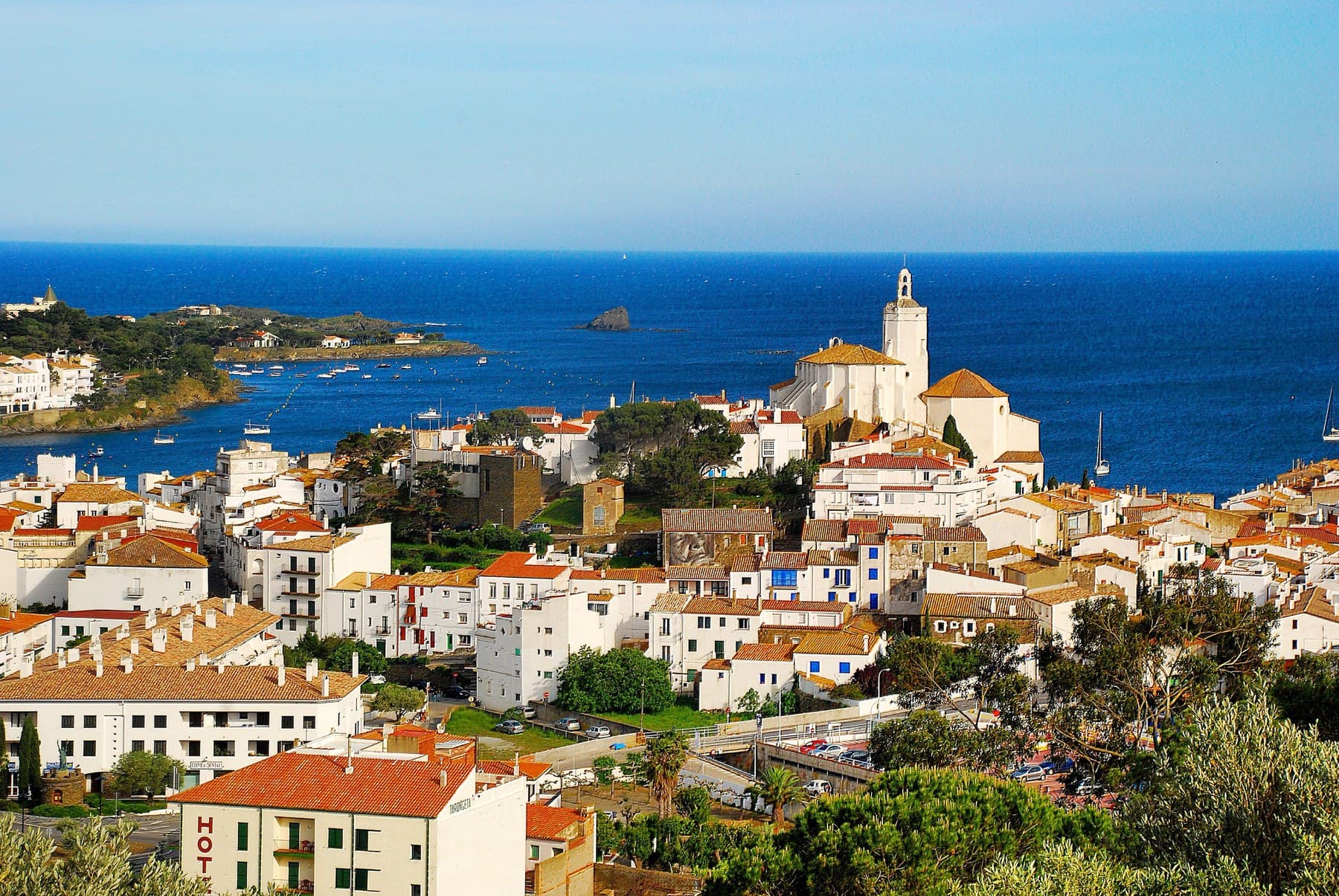
Cadaqués. Whitewashed, stacked around a church on a headland, and deliberately hard to reach. Dalí lived next door at Portlligat and the house is still there on the water. The village is the single best photograph of the trip, and the way to arrive is by boat around the cliffs of Cap de Creus rather than over the pass by road.
Figueres. The Dalí Theatre-Museum is the strangest building in Spain: red walls studded with bread rolls, giant eggs along the roofline, a geodesic dome, and the painter buried in a crypt underneath. It handles school and youth groups easily, which not everything in this part of Spain does.
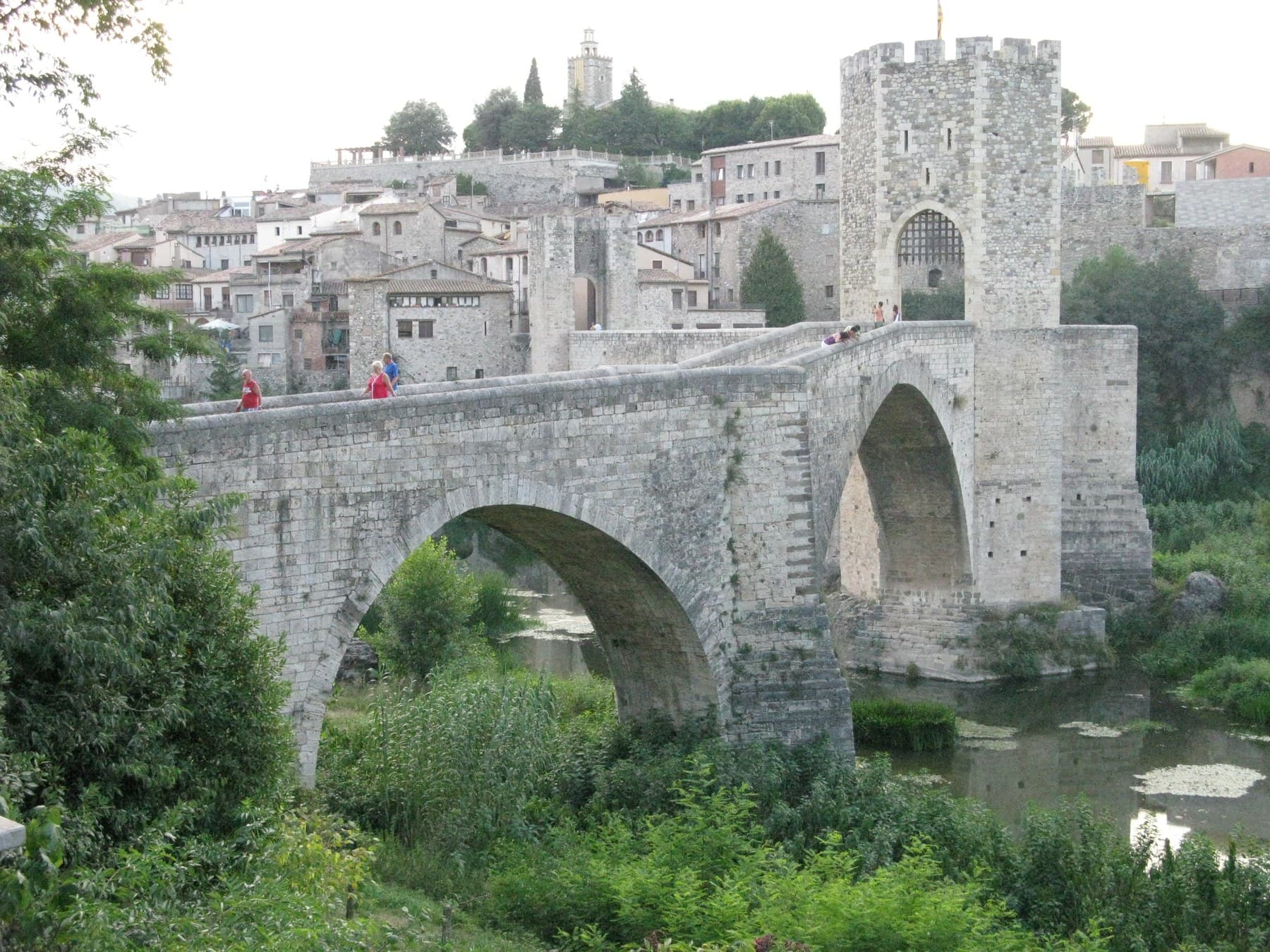
Besalú. A Romanesque town that never modernised. You walk in over a fortified twelfth-century bridge with a gate tower in the middle of it, into streets that have not changed shape in eight hundred years. Twenty-five minutes from Figueres, so the two pair naturally into one inland day.
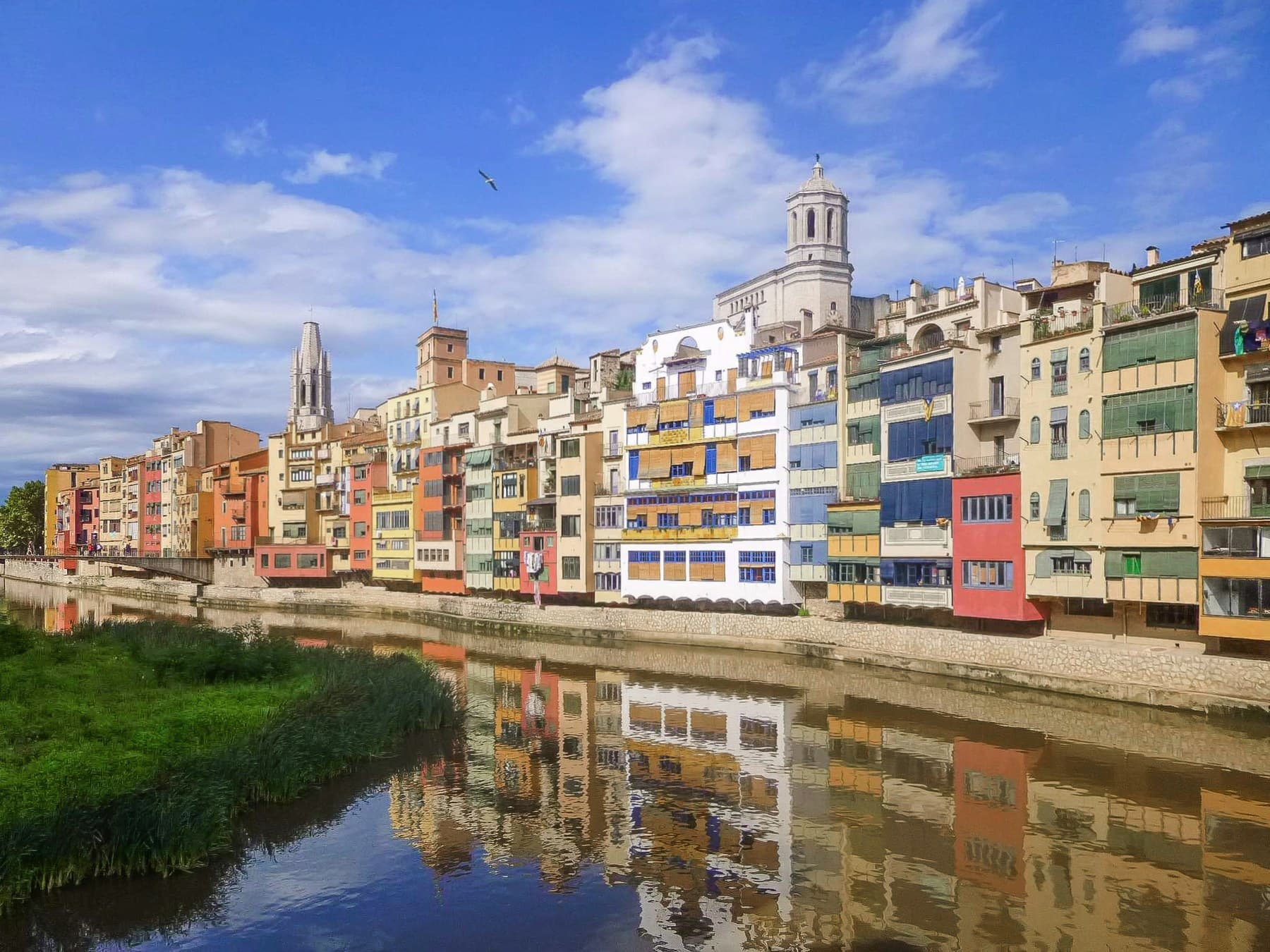
Girona is the fifth, slightly apart because it is inland and on the road home rather than on the coast. Cathedral steps, the coloured houses stacked over the Onyar, and one of the best-preserved Jewish quarters in Europe.
This is the part nobody puts in a brochure, and it is what makes the difference between a leg that works and one that eats two days in a coach.
Do not base in Cadaqués. It is the obvious instinct and it is wrong. The road in is a winding mountain pass, the village core is closed to large coaches so a fifty-seater parks outside and stays outside, and the two hotels there together hold fewer rooms than one large hotel in Roses. For a squad travelling with families, base in Roses and visit Cadaqués by boat. You get the better arrival and a hotel that can actually release twenty-five rooms in July.
Put the medieval towns inland on one day. Besalú and Figueres are fifty and thirty minutes from Roses respectively, and twenty-five minutes from each other. Done together they are a comfortable day. Done separately they are two half-wasted ones.
Break the transfer days with the sightseeing. Tossa on the way up and Girona on the way down means both long drives become days with something in them. Neither costs an extra night.
Book absurdly early for summer. The first weeks of August are the most expensive and tightest of the Spanish year on this coast, and the large hotels are largely committed to European tour operators. A group needing twenty-five rooms should be holding them eight to ten months out, not four.
Here is the mistake that is easy to make and annoying to fix afterwards.
If your last night is on the Costa Brava, your departure transfer to Barcelona-El Prat is close to two hours. On paper that is fine. In practice it means waking a squad of teenagers and their families at five in the morning, loading a coach in the dark, and finishing a good tour with its worst day.
The fix costs one night and is worth every euro of it. Come back down the coast the day before, break the drive with a couple of hours in Girona, and sleep the last night at Castelldefels on the Barcelona coast, twenty minutes from the terminal. Departure morning becomes breakfast, a group photo and a short hop. The last thing anyone remembers is the farewell dinner rather than the coach.
None of this replaces the football. On the program we run it, the training sits in the Barcelona half at the front: two sessions with FC Barcelona coaching staff at the Joan Gamper complex, a Spotify Camp Nou tour for players and families, and a competitive game against Spanish opposition in the evening. Those are organized training experiences booked through the club rather than any claim of partnership, and they are confirmed in writing before the group leaves home.
The Costa Brava then comes second, which is the right order for two reasons. The legs are fresh for the sessions and the game, and the coast works as the wind-down rather than the warm-up. Players who have just played a proper match in front of their families are in a very different mood swimming off the coves at Cadaqués than they would have been on day two.
One practical note for coaches: late July and early August is holiday season for Catalan youth clubs, so a competitive fixture in that window has to be arranged with a club that keeps an active summer squad. It is very doable, but it is not automatic, and anyone who promises you an opponent in the first week of August without naming them is guessing.
Honestly, it depends who is travelling. A squad flying in for a tournament with no family group and a tight budget should stay in Barcelona and spend the money on football.
But most US and Australian clubs that come to Spain bring parents and siblings, and that group has a different problem: the players have a great week and the families have a fine one. The Costa Brava is what closes that gap. It is the half of the trip the parents choose to come back for, and in our experience it is a large part of why a club that tours once tours again.
If you want to see how it looks as a full itinerary, the day-by-day is on the Barcelona and the Costa Brava tour page. For the broader picture of what a Spain trip involves, start with soccer tours in Spain, and if you are weighing dates, the best time of year for a youth soccer tour to Spain is the companion piece. When you want real numbers for your group, start the conversation here.
The Costa Brava is the stretch of Catalan coast running north from Blanes to the French border, in the province of Girona. Tossa de Mar, the southern end, is about an hour and twenty minutes by coach from Barcelona. Roses and Cadaqués, at the northern end, are around two hours. That makes it close enough to add to a Barcelona soccer tour as a second base rather than a day trip.
Four things carry a group. Tossa de Mar has the Vila Vella, the only walled medieval town left standing on the Catalan coast, with the beach directly below the ramparts. Cadaqués is a whitewashed village stacked around a church on a headland, best reached by boat around the cliffs of Cap de Creus. Figueres holds the Dalí Theatre-Museum, which the painter designed himself and is buried under. Besalú is a Romanesque town entered on foot over a fortified twelfth-century bridge. Girona, slightly inland, adds the cathedral steps and the coloured houses over the Onyar.
Usually not. Cadaqués is beautiful but the road in is a winding mountain pass, the village core is closed to large coaches, and its two hotels together hold fewer rooms than a single large hotel in Roses. For a squad travelling with families you want a base with enough rooms to release a block in summer, which in practice means Roses. Then you visit Cadaqués by boat, which is the better arrival anyway.
The departure transfer. From Roses back to Barcelona-El Prat is close to two hours, which means a dawn start with tired players and luggage at the end of a long tour. The fix is to spend the last night back on the Barcelona coast at Castelldefels, twenty minutes from the terminal, and break the drive south with a stop in Girona so the transfer day still earns its place.
Late June through early August is the main window for US and Australian clubs, and the coast is at its best then. It is also the most expensive and most crowded stretch of the Spanish year, so hotel blocks need holding eight to ten months out. Spring, around Easter, is quieter and cheaper, and lines up with tournaments on the Costa Brava, though the sea is cold for swimming.